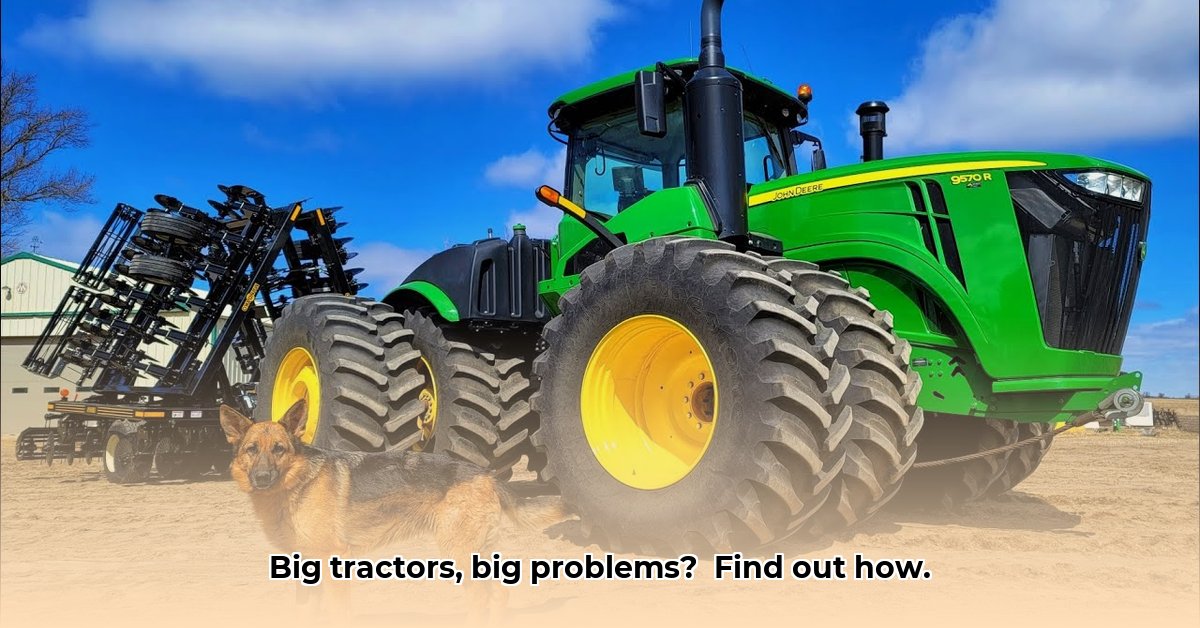
Imagine the rhythmic rumble of a massive tractor, a quintessential sound of modern farming. This machinery symbolizes our relentless pursuit of food production efficiency. However, this efficiency comes at a cost. This article delves into the multifaceted story of large-scale agricultural machinery – its contributions to global food security, its environmental impact, and the innovative solutions paving the way towards a more sustainable future. We'll explore the environmental consequences, examine promising technological advances, and discuss the crucial role of policy in shaping a future where agriculture nourishes both people and the planet. For more on agricultural machinery manufacturers, check out tractor brands.
The Rise of the Agricultural Giants
Over decades, agriculture has undergone a dramatic transformation, shifting from labor-intensive small-scale operations to large-scale mechanized systems. This shift is driven by several factors. A burgeoning global population necessitates unprecedented food production. Simultaneously, agricultural labor forces in many developed nations are shrinking, fueling the demand for machinery that can match human productivity. Large tractors, capable of covering vast areas rapidly, appear as the solution to this pressing need. But is simply "bigger better," or is there a more nuanced answer focusing on responsible scaling and sustainable practices?
The Appeal of Efficiency: A Closer Look
The benefits of large-scale machinery are undeniable. A single powerful tractor can plant or harvest hundreds of acres daily—a feat requiring significantly more time and labor otherwise. This translates to reduced labor costs and minimized post-harvest losses (less crop spoilage). Furthermore, economies of scale are realized, resulting in lower production costs per unit. Increased output concurrently lowers food prices for consumers. This efficiency, however, demands a comprehensive evaluation of its broader impacts.
Environmental Impacts: Weighing the Costs
The environmental footprint of large-scale machinery is substantial and multifaceted. The sheer weight of these tractors compacts soil, hindering water infiltration and negatively affecting soil health. This compaction, in turn, can decrease long-term crop yields. Moreover, these machines are substantial fuel consumers, contributing significantly to greenhouse gas emissions. The manufacturing process itself—from raw material extraction to assembly—is energy intensive, further increasing the overall carbon footprint. Is this efficiency worth the environmental cost? The answer necessitates careful consideration and proactive mitigation strategies.
Social Equity: A Level Playing Field?
Access to advanced farm technology isn't equitable. Smallholder farmers, especially in developing countries, often lack the financial resources to acquire and maintain expensive machinery. This technological disparity creates a significant disadvantage, potentially forcing many small farmers out of business and concentrating agricultural power among fewer, larger operators. This growing gap between large and small-scale operations presents serious social and economic challenges. How can we ensure a more equitable distribution of resources and technological access? This critical question requires addressing through exploring options such as government subsidies, cooperative ownership models, and the development and deployment of more affordable, appropriate technologies.
Charting a Course Towards Sustainable Agriculture
The good news is that sustainable agriculture doesn't necessitate abandoning large machinery entirely. It instead involves a responsible and innovative integration of this technology. A holistic approach is essential to balance efficiency with environmental protection and social equity. The following strategies offer pathways towards this balance:
Strategies for a Greener Future:
Precision Agriculture: GPS-guided machinery optimizes input use (fertilizers, pesticides), minimizing waste and environmental harm. This yields reduced resource consumption and lessened environmental damage. The challenge lies in the high initial investment and the need for specialized training.
Fuel-Efficient Technologies: Hybrid or electric tractors, coupled with engine improvements, drastically decrease fuel consumption and emissions. This lowers greenhouse gas emissions and operating costs. However, higher upfront costs and limited alternative fuel infrastructure pose obstacles.
Sustainable Farming Practices: No-till farming, cover cropping, and crop rotation improve soil health, mitigate erosion, and enhance water retention. The benefits include improved soil fertility, increased water efficiency, and reduced erosion. Challenges include potential adjustments required in farming techniques and possible short-term yield fluctuations.
Lifecycle Management: Repair, reuse, and responsible recycling of farming equipment minimize waste and environmental impact. This reduces the environmental burden and offers cost savings by extending machine lifespans. Challenges include the need for robust recycling infrastructure and potential modifications to machine designs.
Policy and Incentives: Government subsidies, regulations, and educational programs encourage the adoption of sustainable practices and technology. Faster adoption of sustainable technologies and increased farmer participation are achievable. However, this requires policy coordination, adequate funding, and careful consideration of potential regulatory challenges.
The Future of Farming: A Call to Action
The future of farming hinges on our ability to find a sustainable balance between efficiency and environmental stewardship. This isn't solely about technological advancement; it demands a fundamental shift in how we approach and manage food systems. Collaboration among farmers, manufacturers, policymakers, scientists, and consumers is crucial in creating a future where agriculture sustains both people and the planet. This is a complex but vital challenge to address. Ongoing research into sustainable practices and technologies offers promising avenues for progress. The success of sustainable agriculture ultimately depends on our collective commitment to solutions that balance both efficiency and environmental responsibility. The decisions we make today will shape the landscapes—and food security—of tomorrow. This is a journey that requires our collective effort, creativity, and determination.